Fabric Wall Art in Embroidery Hoops: A Simple Trio
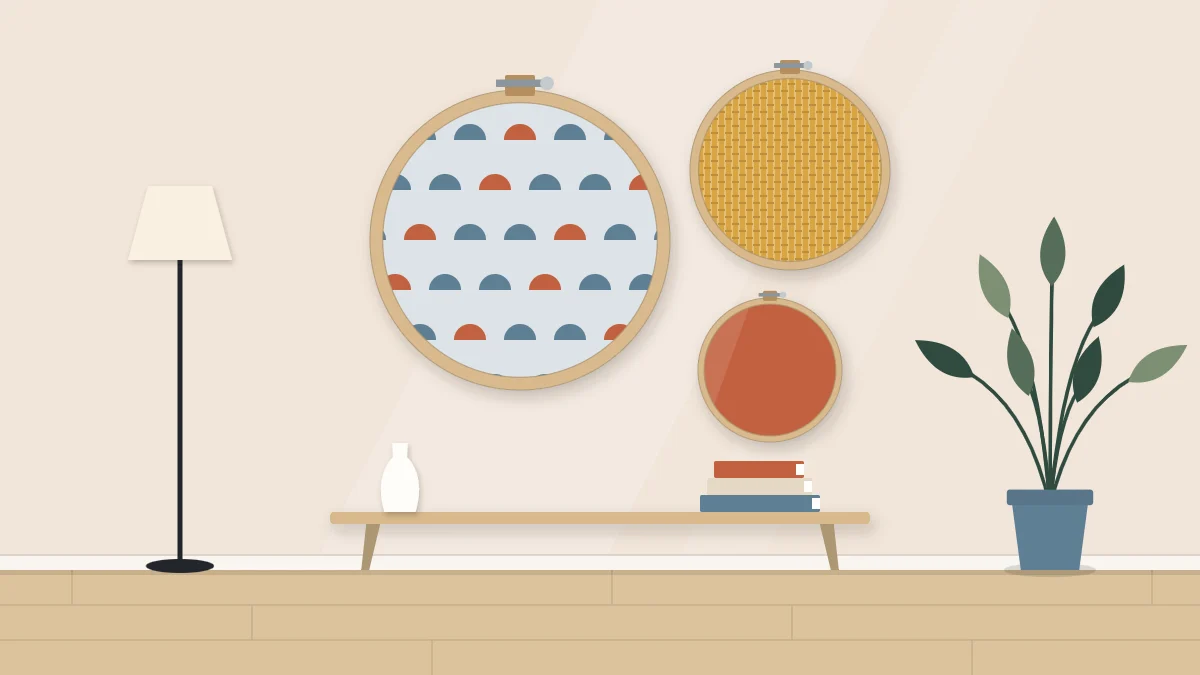
Use three embroidery hoops as round frames for fabric: pick a pattern, a texture and a solid that share a palette, tension them tight, and hang them as a cluster.
Tutorial at a glance
Materials
- Three wooden embroidery hoops in different sizes
- Three woven fabrics: pattern, texture, solid
- Fabric scissors
- Iron
- Needle and strong thread or fabric glue
- Felt or card for backing (optional)
Fabric wall art in embroidery hoops needs no sewing and no frame shop. The hoop is the frame: two wooden rings that grip a piece of cloth and hold it flat. One hoop on its own can look like an unfinished craft project, but three hoops in different sizes, filled with fabrics that belong together, read as a planned group.
The work is mostly in the choosing. Once you have three fabrics that share a palette, the making takes an afternoon, and the only technique to learn is getting the fabric properly tight.
What you need
- Three wooden embroidery hoops in different sizes, for example 6, 8 and 10 in (15, 20 and 25 cm)
- Three pieces of woven fabric, each at least 3 in (7.5 cm) wider than its hoop
- Fabric scissors and an iron
- Needle and strong thread, or fabric glue
- Felt or card for backing (optional)
Check each hoop before you buy or use it. The two rings should sit flush with no gaps, and the tightening screw at the top should turn smoothly.
Choose three fabrics that share a palette
A reliable formula for a trio is one pattern, one texture and one solid. Each fabric does a different job, so they do not compete.
| Fabric | What it adds | Good choices |
|---|---|---|
| Pattern | Movement and the color story | Simple stripes, dots, small leaf or block prints |
| Texture | Surface interest without new colors | Linen, a loose plain weave, fine corduroy |
| Solid | A resting place for the eye | Plain cotton in one color taken from the pattern |
Start with the pattern, because it sets the palette. Pick out two of its colors: use one for the solid and a quieter neutral from the same family for the texture. If you lay all three pieces side by side and one seems to belong to a different room, replace it.
Scale matters too. A large print disappears inside a small hoop, where you may only see part of one motif. Put the pattern in the largest or middle hoop, and check it by laying the inner ring on the cloth and moving it around until the section inside looks balanced.
Medium-weight woven cotton and linen are the easiest to tension. Stretch knits pull out of shape, and very thick fabric may stop the rings from closing.
Press and cut the fabric
Iron each piece first, following the care guidance for that fabric. A crease that is hooped in tends to stay visible, and it is hard to press out later.
Cut each piece as a square about 3 in (7.5 cm) larger than the hoop’s diameter. A square is quicker to cut than a circle and gives you corners to pull on while you tension; the extra is trimmed away afterward.
Tension the fabric drum-tight
Loose fabric sags and shows every ripple once it hangs on the wall. The aim is a surface that makes a soft drum sound when you tap it.
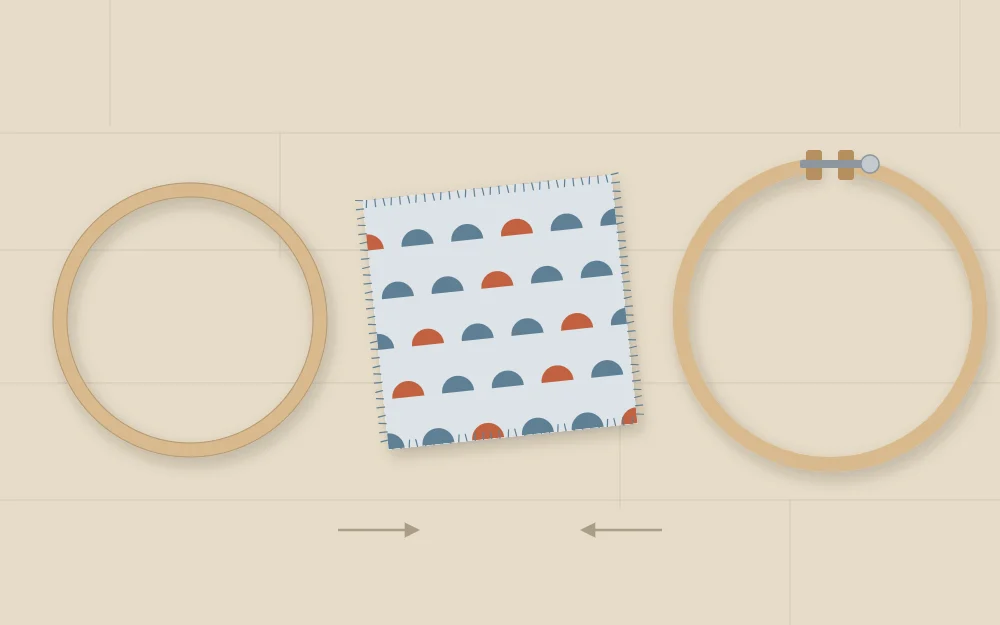
- Loosen the screw and separate the rings. Lay the inner ring flat on the table.
- Place the fabric over it, right side up, with the part you want to show centered. Keep the weave or any stripes running straight up and down.
- Press the outer ring down over both, with the screw at the top where the piece will hang.
- Tighten the screw until the fabric is held but can still be pulled.
- Work around the hoop, pulling the fabric outward a little at a time: top, bottom, left, right, then the points in between. Pull along the grain of the weave, not on the diagonal, which distorts the pattern.
- Tighten the screw fully, then go around once more and take up any remaining slack.
Tip
If a slippery fabric keeps loosening, wrap the inner ring with a strip of cotton tape or a torn strip of plain cotton before hooping. The wrapped ring grips better.
Trim and finish the back
The back of a hoop is seen from the side whenever the hoop sits near a doorway or a corner, so it is worth a few minutes.
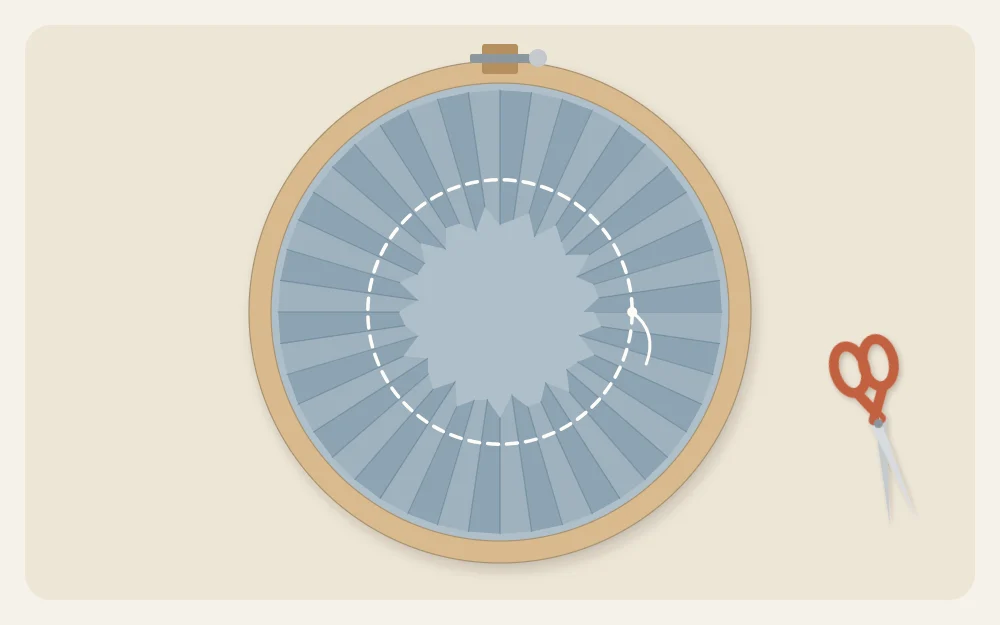
Trim the excess fabric to an even border of about 1 in (2.5 cm) all around. Then choose one of two finishes:
- Gathered: sew a line of long running stitches around the border, close to the cut edge, and pull the thread so the fabric draws in toward the center. Knot it off.
- Glued: run a thin line of fabric glue around the inside of the inner ring and press the border onto it, a short section at a time. Follow the glue’s label for drying.
For a tidier look, cut a circle of felt or card slightly smaller than the hoop and stitch or glue it over the gathered fabric.
Arrange the trio as a cluster
Three hoops in a straight row look like a size chart. A cluster looks composed. Lay the hoops on the floor and try a loose triangle: the largest hoop low and to one side, the middle one higher on the other side, and the smallest tucked between or above them.
Keep the gaps between hoops small and roughly equal, around 1 to 2 in (2.5 to 5 cm), so the three read as one piece. Place the solid next to the pattern, not at the far end, so the color link between them is obvious.
When you like the arrangement, trace each hoop on scrap paper, cut out the circles and tape them to the wall with painter’s tape to test the position. The same paper-template method scales up for larger groups, as explained in how to arrange a gallery wall.
Hang the hoops
A hoop usually hangs from its screw fitting on a small nail or hook. Hoops are light, but weigh yours anyway, identify your wall material, and use hardware its manufacturer rates for that weight and wall type, following the package instructions. In a rental, check with the landlord first.
Variations to try
Once the basic trio is up, the same hoops can hold other things. Small textile compositions made with the method in fabric scrap collage wall art fit a hoop well, and swapping fabrics with the seasons takes minutes because nothing is permanent until you glue it.
If you would rather show small handmade pieces under glass or in a box frame, framed craft wall art covers that option.
Frequently asked questions
What kind of fabric works best in an embroidery hoop?
Medium-weight woven fabrics such as cotton and linen are the easiest, because they pull tight without distorting and are thin enough for the rings to close. Stretch knits tend to warp the pattern, and very thick upholstery fabric can keep the outer ring from seating properly.
How do I stop the fabric from going slack over time?
Tighten in two stages: partly close the screw, pull the fabric evenly all the way around, then tighten fully and pull once more. Wrapping the inner ring with cotton tape adds grip, and gathering or gluing the border at the back helps keep the tension in place.
Can I change the fabric later?
Yes, as long as you finished the back with gathering stitches instead of glue. Snip the gathering thread, loosen the screw, lift the outer ring off and hoop a new piece. This makes a hoop trio an easy display to refresh when you change a room's colors.