Framed Craft Wall Art: How to Frame Small Handmade Pieces
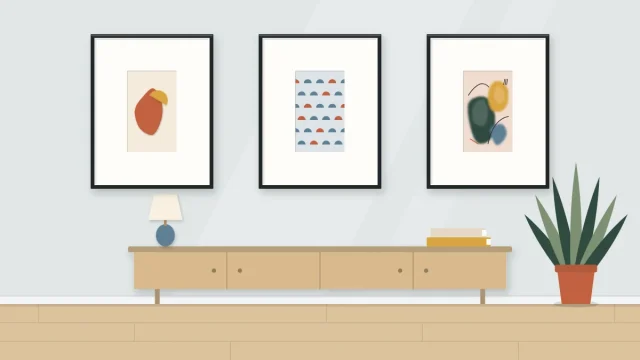
Make small paper, fabric and painted pieces look finished in ready-made frames: mat proportions, a clean backing sheet, light mounting methods, depth for raised work and a consistent set.
Creative Wall Decor You Can Make
Step-by-step tutorials for paper, painted, textured, fabric and geometric pieces, plus the color, composition and hanging basics that help them look right on your wall.
New to making your own wall art? Work through these three guides in order.
Not sure where to start? Compare the paper, paint, texture and fabric routes by wall, time, mess and tools, then follow a short decision path to a first project that suits you.
A practical method for choosing colors: pull three from the room, add a neutral, set dominant, secondary and accent proportions, check warm, cool, light and dark, then test swatches on scrap.
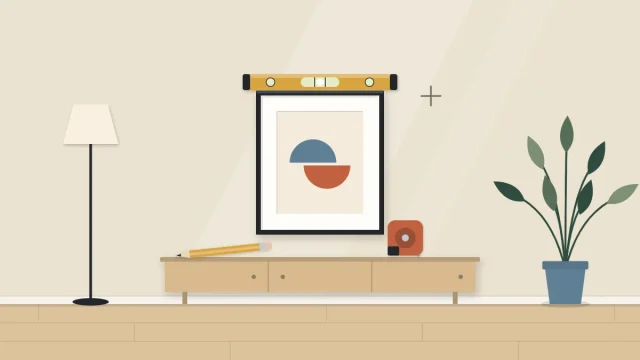
A careful method for hanging light handmade pieces: weigh the piece, identify the wall, choose hardware its manufacturer rates for both, check for wires and pipes, then mark and level.
Make small paper, fabric and painted pieces look finished in ready-made frames: mat proportions, a clean backing sheet, light mounting methods, depth for raised work and a consistent set.
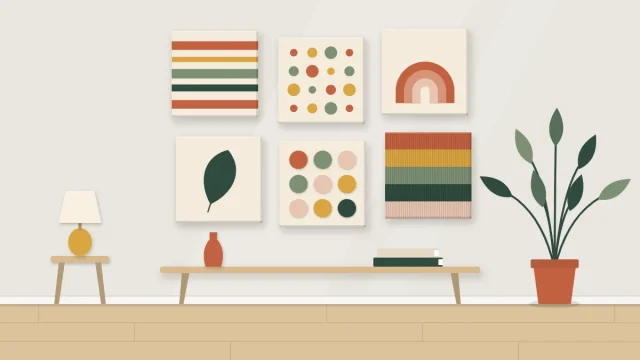
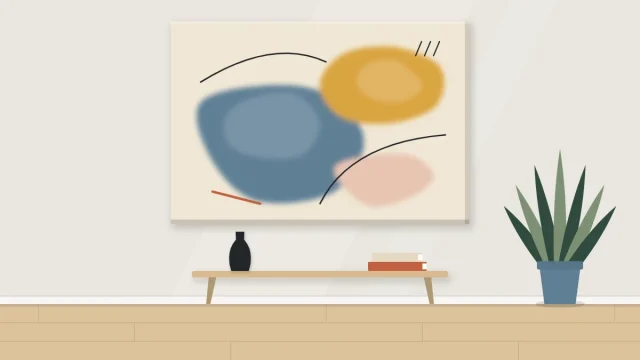
Paint a complete first canvas: two flat color fields divided by a soft curve, with one small accent shape. Includes priming, mixing enough paint, painting the edges and fixing common slips.
Twelve original, low-skill projects grouped by material, from a two-color canvas to yarn-wrapped shapes, each with what it needs and the kind of wall it suits.
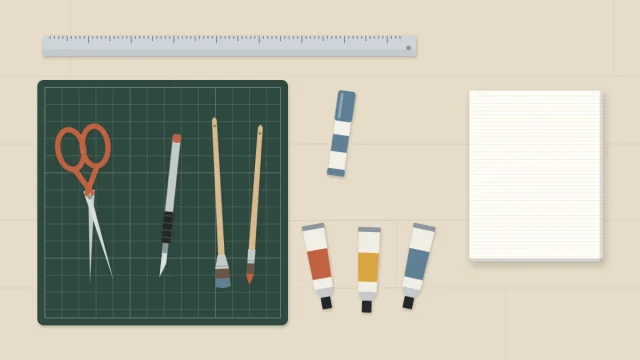
A minimal starter kit described by type, not brand: cutting tools, the right glue for each material, a small acrylic palette, three brushes and five surfaces, plus what to leave on the shelf for now.
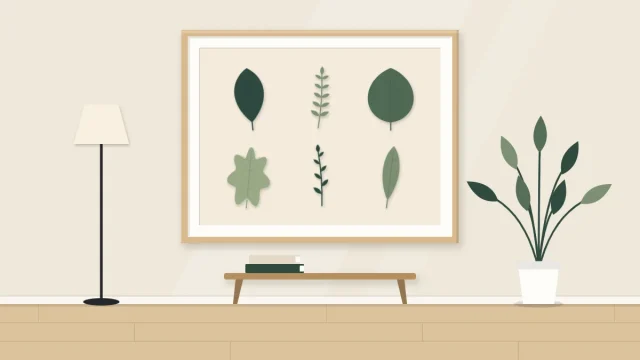
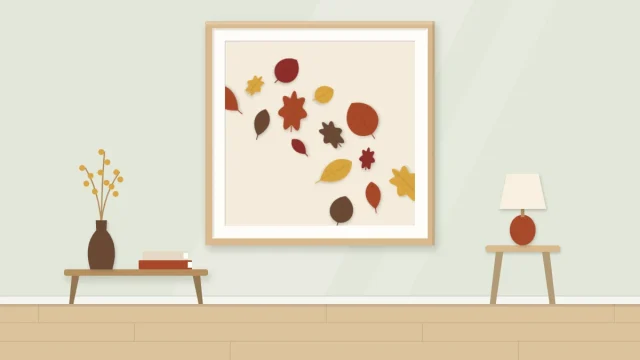
Fold, draw half a leaf and cut: four easy leaf shapes arranged like a specimen sheet on a cream background. Gluing only the spine lets the edges lift for a light, dimensional finish.
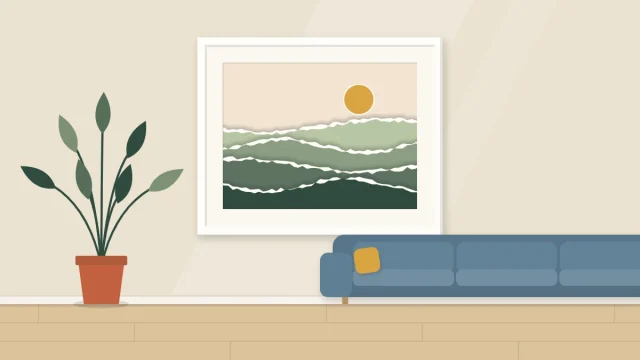
Tear bands of paper into sky, hills and foreground, then overlap them from back to front for an imagined landscape. Includes how to control a white or colored torn edge and how to grade tones from pale to dark.
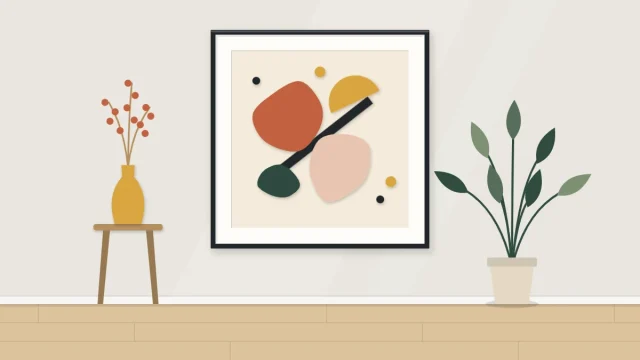
Build an original abstract collage from shapes you cut yourself. Learn how to cut a related family of shapes, test arrangements dry, overlap them, glue without wrinkles and press the piece flat while it dries.
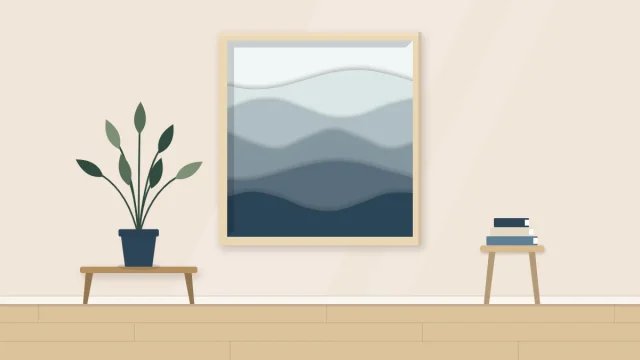
Cut five wavy cardstock layers, stack them from light to dark and lift each one on foam spacers so real shadows fall between them. Covers paper weight in gsm, clean curves, stacking order and frame depth.
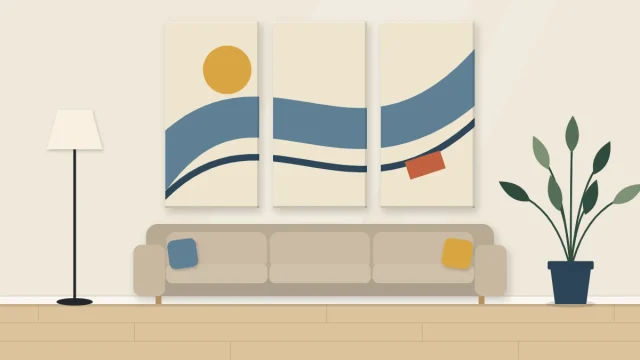
Paint two or three canvases as a single surface so the design flows across them, then keep the palette, order and hanging gap consistent so the set reads as one piece.
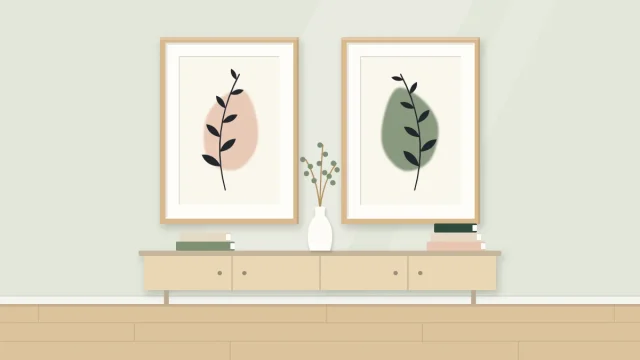
Paint a soft color shape, then add a single-line stem and press-and-lift leaves with one round brush. Includes the practice drill and how to make a matching pair.
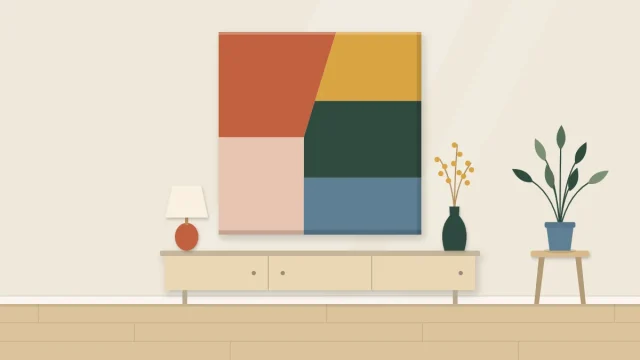
Plan three to five flat color blocks, then use painter's tape the right way: press it, seal it with the base color, paint away from it and peel at a low angle for clean edges.
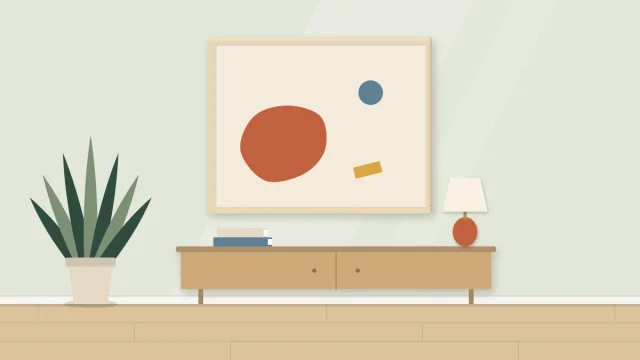
Paint a first abstract canvas in acrylic with three colors and white: tone the ground, block in three large shapes, adjust the edges, add a few marks and stop. Includes what to do when the color turns muddy.
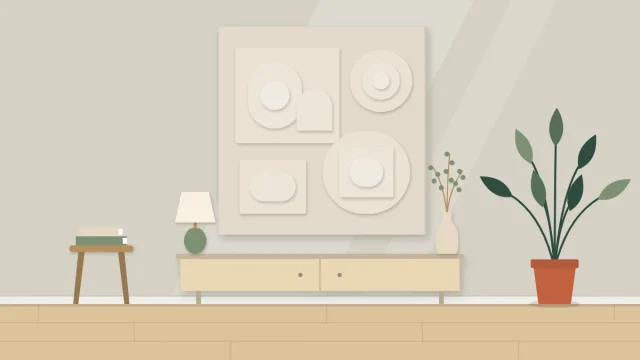
Stack cut cardboard shapes on a board in two or three height levels, seal the edges, and paint everything one matte color so the shadows carry the design.
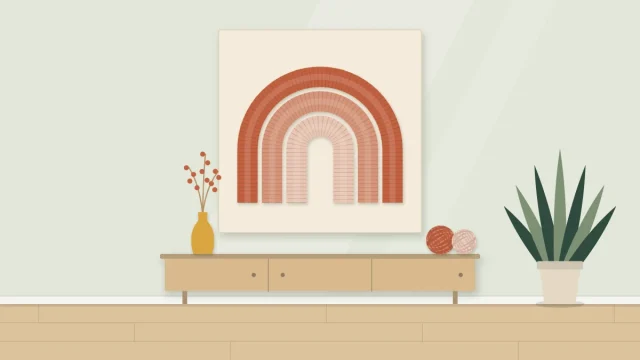
Wrap yarn tightly around cardboard bars and arches to make color-banded wall pieces. Covers cutting stiff shapes, anchoring the yarn, gap-free wrapping and hidden color changes.
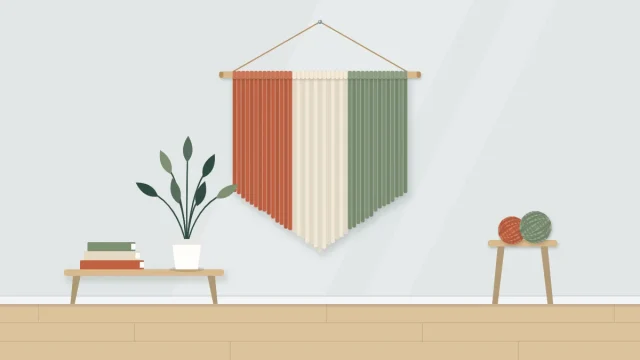
Make a dense yarn hanging with a single knot: cut equal strands, attach them to a dowel with lark's head knots, arrange color bands and trim the bottom into a V or diagonal.
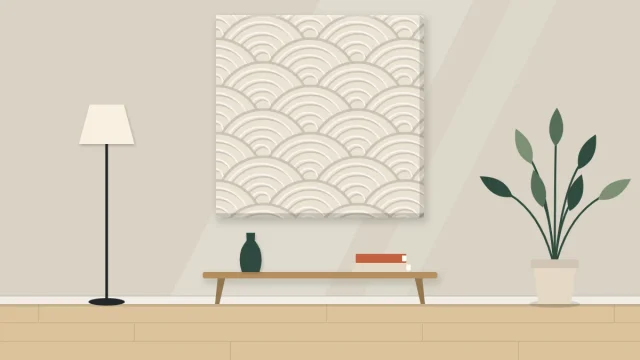
Spread a thin layer of modeling paste on a canvas panel, comb it into arcs with a notched card, let it dry fully and paint it one matte color so light and shadow form the design.
Color, composition, measuring, hanging and arranging: the skills behind every project.
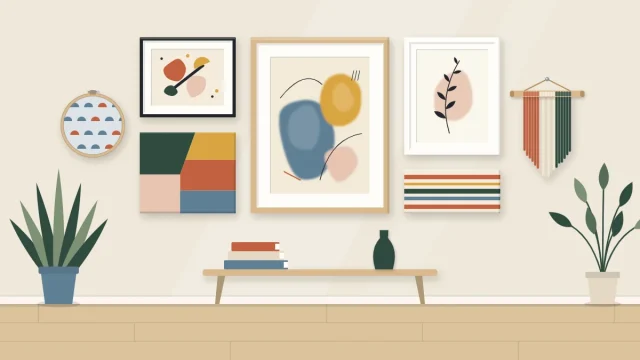
Plan a gallery wall on the floor, trace each piece onto paper, mark the hanger points and tape the templates up, so the layout is settled before anything is hung.
A careful method for hanging light handmade pieces: weigh the piece, identify the wall, choose hardware its manufacturer rates for both, check for wires and pipes, then mark and level.
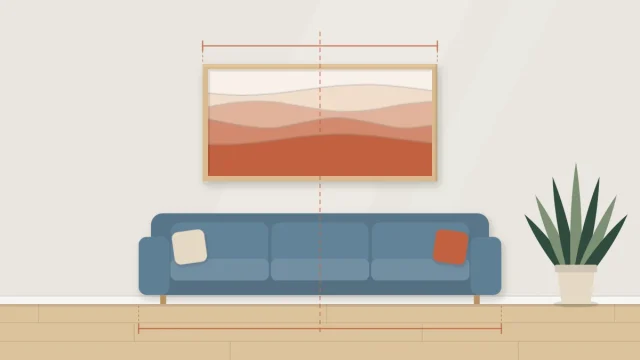
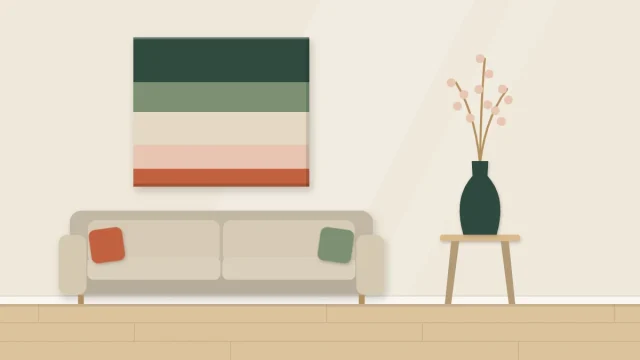
Work out the right width, height and spacing for a piece before you make it, using common sizing rules of thumb, a worked sofa example and a painter's tape outline on the wall.
Six plain composition ideas for people who are not artists: one focal point, thirds, odd groupings, a size hierarchy, open space and repetition, plus a ten-minute thumbnail exercise to test a layout before you use real materials.
Pick a topic to see every tutorial in that category.
Cut paper leaves in four warm tones, score a center vein so each one lifts, and glue them at a single point in a loose diagonal drift across a cream background.
Keep one set of frames on the wall all year and rotate four small sets of same-size inserts through them. Covers palettes, simple motifs, labeling and flat storage.
Plan a gallery wall on the floor, trace each piece onto paper, mark the hanger points and tape the templates up, so the layout is settled before anything is hung.
A careful method for hanging light handmade pieces: weigh the piece, identify the wall, choose hardware its manufacturer rates for both, check for wires and pipes, then mark and level.
Work out the right width, height and spacing for a piece before you make it, using common sizing rules of thumb, a worked sofa example and a painter's tape outline on the wall.
Draw clean arches, circles and half circles with string, a pencil and a few bowls, then paint them or cut them from paper. Includes centering, even band widths and three balanced layouts.
Pick one small project, gather a few basic supplies and make something that suits your room. Every tutorial on the site is free to read, no sign-up needed.