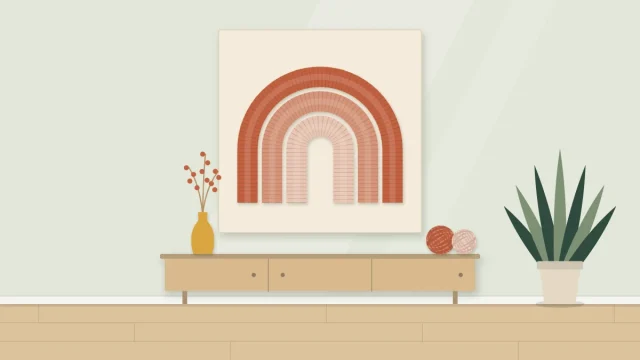
Yarn Wrapped Wall Art: Color Bands on Cardboard Shapes
Wrap yarn tightly around cardboard bars and arches to make color-banded wall pieces. Covers cutting stiff shapes, anchoring the yarn, gap-free wrapping and hidden color changes.
Creative Wall Decor You Can Make
30 tutorials published
Wrap yarn tightly around cardboard bars and arches to make color-banded wall pieces. Covers cutting stiff shapes, anchoring the yarn, gap-free wrapping and hidden color changes.
Make a dense yarn hanging with a single knot: cut equal strands, attach them to a dowel with lark's head knots, arrange color bands and trim the bottom into a V or diagonal.
Spread a thin layer of modeling paste on a canvas panel, comb it into arcs with a notched card, let it dry fully and paint it one matte color so light and shadow form the design.
Paint two or three canvases as a single surface so the design flows across them, then keep the palette, order and hanging gap consistent so the set reads as one piece.
Paint a soft color shape, then add a single-line stem and press-and-lift leaves with one round brush. Includes the practice drill and how to make a matching pair.
Plan three to five flat color blocks, then use painter's tape the right way: press it, seal it with the base color, paint away from it and peel at a low angle for clean edges.
Paint a first abstract canvas in acrylic with three colors and white: tone the ground, block in three large shapes, adjust the edges, add a few marks and stop. Includes what to do when the color turns muddy.
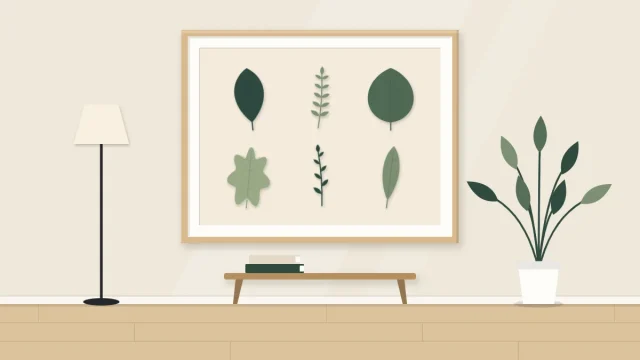
Fold, draw half a leaf and cut: four easy leaf shapes arranged like a specimen sheet on a cream background. Gluing only the spine lets the edges lift for a light, dimensional finish.
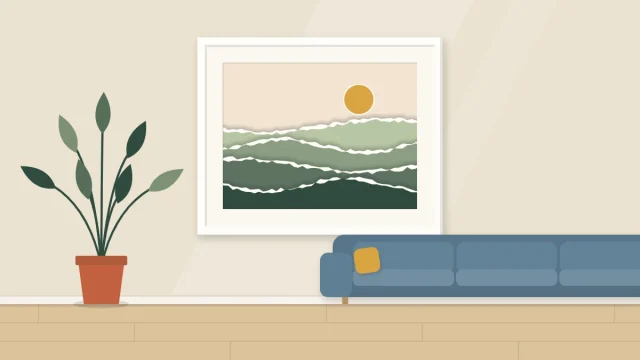
Tear bands of paper into sky, hills and foreground, then overlap them from back to front for an imagined landscape. Includes how to control a white or colored torn edge and how to grade tones from pale to dark.
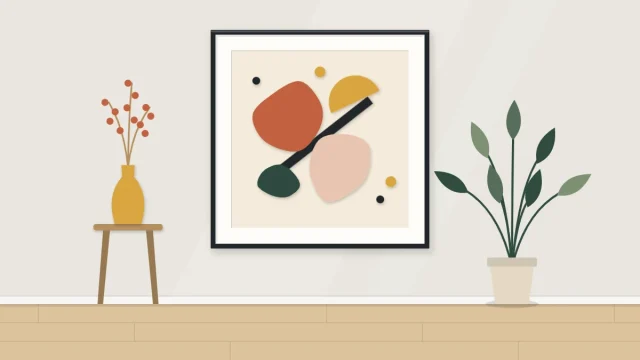
Build an original abstract collage from shapes you cut yourself. Learn how to cut a related family of shapes, test arrangements dry, overlap them, glue without wrinkles and press the piece flat while it dries.
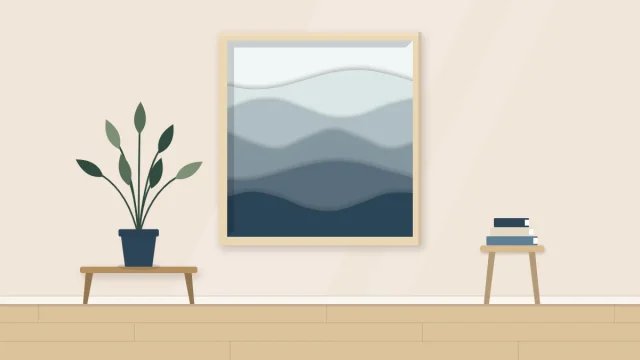
Cut five wavy cardstock layers, stack them from light to dark and lift each one on foam spacers so real shadows fall between them. Covers paper weight in gsm, clean curves, stacking order and frame depth.
Six plain composition ideas for people who are not artists: one focal point, thirds, odd groupings, a size hierarchy, open space and repetition, plus a ten-minute thumbnail exercise to test a layout before you use real materials.